Skip to product information
1 of 13

TeaFit

Culinary Matcha

Culinary Matcha

Regular price Rs. 584.00
Regular price Rs. 649.00 Sale price Rs. 584.00
Unit price Rs. 29.20  per  item
Sale Sold out
Tax included. Shipping calculated at checkout.
size
🚚 All items ship the next business day.
🇮🇳 Delivered in India before May 29.
🌍 Delivered Globally between May 31 and Jun 14.

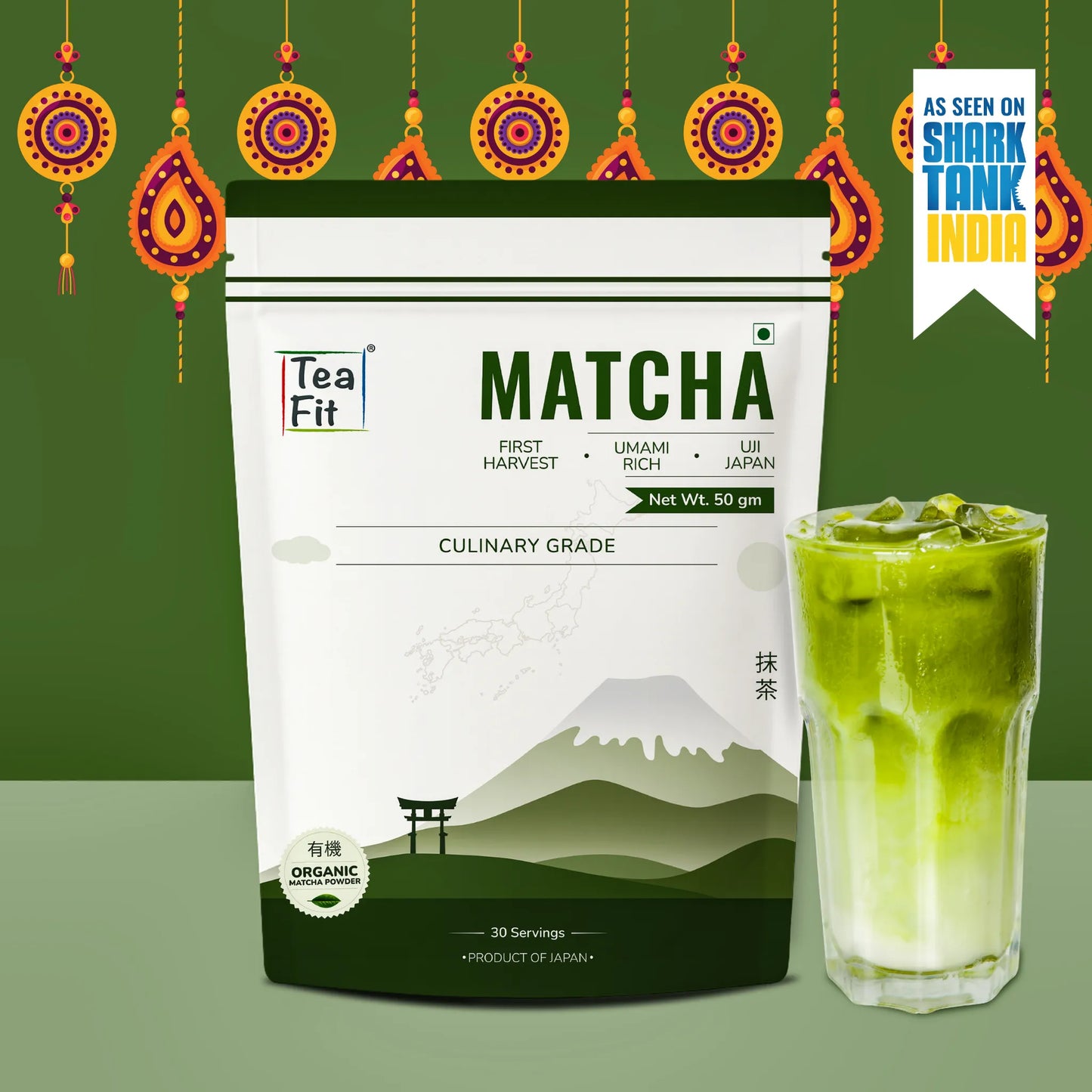
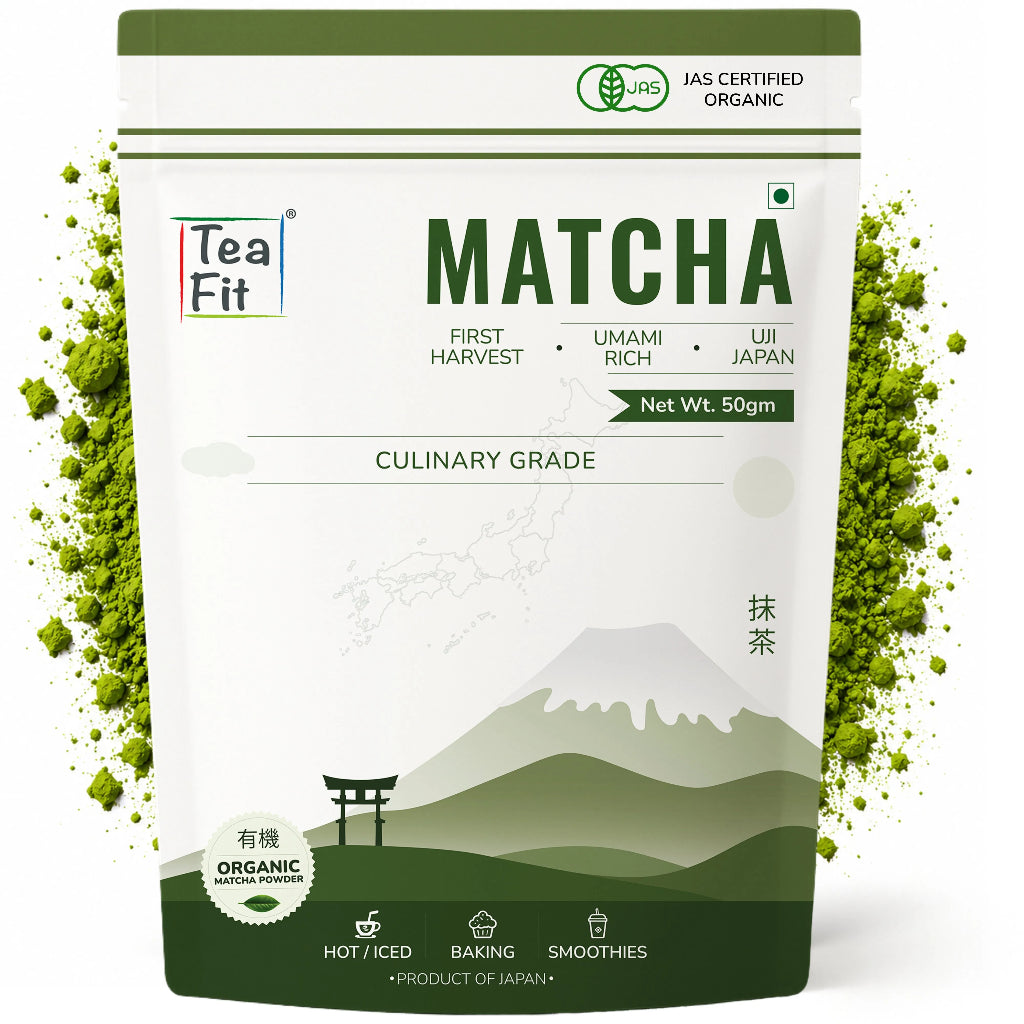
For those who want real matcha powder in their lattes, protein shakes, pre-workout blends, smoothies, baked goods, and more - TeaFit's culinary matcha delivers. Sourced from the same Uji farm as our Ceremonial grade and JAS organic certified, this is an authentic Uji culinary matcha built to blend without losing its character.

Culinary matcha is selected for a bolder, more robust flavour profile - one that comes through when mixed with milk, fruit, protein, or batter. Where ceremonial matcha is meant to be tasted alone, matcha for cooking and blending is meant to work with other ingredients without disappearing into them.

Each sachet is pre-portioned, sealed to preserve freshness, and protected from light - keeping colour, potency, and flavour intact until the moment you open it. Our MicroMill™ Process grinds the leaves to an ultra-fine particle size, so the powder blends smoothly without clumping. No sifting, no whisk, no extra steps. At an honest matcha price for daily use, there are no shortcuts here.

Same origin. Same standards. Different purpose.

  • Culinary Grade Matcha - Uji, Japan
  • JAS Organic Certified
  • MicroMill™ Process - Blends Without Clumping
  • No Added Sugar, No Maltodextrin or Sweeteners
  • Pre-Portioned Sachets - Freshness Sealed

Each box carries 20 sachets, perfectly measured for consistent results every time. Also available in a pack of 30 sachets for ardent Japanese tea lovers.

Once you've baked with real Uji matcha, everything else is just green food colouring.

Product Details

Variety
Instant Powdered Beverage Mix
Size
Pack of 20 (32g) · Pack of 30 (48g)
Country of Origin
Japan
Flavour
Matcha
Caffeine
Regular
Dietary
Organic, Vegan, Vegetarian, Gluten-free, Single origin, No artificial flavors, No preservatives, No artificial sweeteners, No artificial colors, Sugar-free, Low sodium, Low fat
View full details

Frequently Asked Questions

All you wanted to know about Culinary Matcha

What is in TeaFit Culinary Matcha?

TeaFit Culinary Matcha is 100 percent pure Japanese matcha powder sourced from Uji, Japan, JAS organic certified, processed through TeaFit's MicroMill instant blending technology.

Each sachet contains nothing else: no added sugar, no maltodextrin, no anti caking agent, no flavouring, no synthetic colour, no preservatives, no milk solids, no fillers of any kind.

Culinary grade matcha is selected for a bolder, more robust flavour profile that holds its character when blended with milk, fruit, protein powder, or batter.

Where ceremonial matcha is meant to be tasted alone with hot water, TeaFit Culinary Matcha is built to work alongside other ingredients without disappearing into them.

The MicroMill process grinds the Uji leaves to an ultra fine particle size, which is the structural reason the matcha powder blends smoothly without clumping or sifting, no whisk, no chasen, no extra steps required.

The pack is naturally vegan, naturally gluten free, naturally lactose free, and contains a single ingredient: real Japanese matcha from the Uji region. The sachet format preserves the green colour and grassy aromatic compounds that loose tin matcha typically loses to oxygen exposure within weeks of opening.

Is TeaFit Culinary Matcha sugar free?

Yes, completely. TeaFit Culinary Matcha is pure Uji matcha powder with zero sugar of any form. There is no added sugar, no artificial sweetener (no sucralose, aspartame, stevia, acesulfame potassium, saccharin), no maltodextrin filler, no honey, no jaggery, no rice syrup.

The matcha powder contributes zero sugar contribution before any additions you choose to make in your recipe.

Most matcha drinks sold in cafés across India and globally (matcha lattes, matcha frappes, bottled matcha drinks, matcha cookies, matcha cakes) carry significant added sugar, often 15 to 25 grams per serving, which obscures the natural taste of real matcha and adds substantial calories to what consumers perceive as a wellness beverage.

By starting with TeaFit Culinary Matcha as a pure base, you control exactly what goes into your cup or recipe. If you want sweetness, add it intentionally and measure it. Many regular matcha drinkers find that after a few weeks of unsweetened or lightly sweetened matcha at home, the original sweetened café versions begin to taste cloying rather than balanced.

Is matcha powder suitable for low sugar lifestyles?

Yes, in its pure form. TeaFit Culinary Matcha contains zero sugar and minimal carbohydrate.

Mixed with water or unsweetened plant milk, the matcha adds essentially no sugar contribution to a daily routine. This suits adults building a low sugar daily routine. The final cup sugar contribution depends entirely on what you add after the matcha leaves the sachet.

A café matcha latte with sweetened oat milk, vanilla syrup, and whipped cream is a very different product from TeaFit Culinary Matcha mixed at home with hot water and unsweetened milk. The pure matcha powder gives you the choice across every preparation.

Use it as the base for low sugar matcha lattes, low sugar matcha smoothies, baking applications where you control sweetener volume, protein shake additions, and pre workout blends without sweetener load. The pack itself contributes nothing to the sugar count.

Where is TeaFit Culinary Matcha sourced from?

TeaFit Culinary Matcha is sourced from Uji, Japan, the historic origin of premium Japanese matcha and the most prestigious matcha growing region in the world.

The leaves are JAS organic certified (Japanese Agricultural Standard, the Japanese government organic certification). The powder is then processed through MicroMill technology to deliver instant, no whisk integration.

Uji has been the centre of Japanese matcha cultivation for over 800 years and remains the single most prestigious matcha origin worldwide. The terroir, the cultivars, and the processing knowledge developed in Uji give matcha its characteristic vivid green colour, smooth umami body, and balanced character.

Generic matcha powder sold at lower price points is typically blended from unspecified Asian green tea origins, ground in industrial equipment to a coarser particle size, and labelled matcha for marketing purposes despite not meeting traditional matcha specifications.

TeaFit Culinary Matcha begins with the real material: Uji leaves, JAS organic certified, then refined through MicroMill processing to deliver instant powder behaviour without sacrificing the Uji character that defines real Japanese matcha.

How do I make a matcha latte or recipe with TeaFit Culinary Matcha?

Three steps, sixty seconds, no whisk.

Step 1: tear open one TeaFit Culinary Matcha sachet and empty the powder into your cup, glass, or recipe bowl.
Step 2: add hot water (for a latte: 100 ml hot water, then top with 100 to 150 ml warm milk; for cold: cold water or cold milk).
Step 3: stir for 30 seconds. The MicroMill ground powder dissolves cleanly without clumping.

Each TeaFit Culinary Matcha sachet is pre portioned for one consistent serving. The matcha works directly across hot lattes, iced lattes, smoothies, protein shakes, baking applications, and ice cream bases.

For baking, fold the powder into the dry ingredients of any standard recipe at the volume you would use loose matcha.

For smoothies, add the sachet directly to the blender alongside frozen fruit, banana, and plant milk; the MicroMill grain integrates without clumping.

For matcha protein pre workout, stir into water or milk first, then combine with protein powder to avoid gritty texture.

Iced matcha lattes work especially well: dissolve in 50 ml hot water, then pour over ice and top with cold milk.

How much caffeine is in TeaFit Culinary Matcha?

Approximately 50 to 70 mg of caffeine per sachet of TeaFit Culinary Matcha, depending on serving size, comparable to a cup of brewed black tea and lower than most coffees (95 to 120 mg).

Matcha caffeine releases more gradually than coffee caffeine because of the L theanine in the leaf, which is part of the structural appeal of the cup.

Matcha caffeine paired with L theanine produces a more sustained, balanced energy profile than coffee, where caffeine acts more sharply and falls off faster.

This is the structural reason matcha lattes have become the morning beverage of choice for adults who want the alertness of coffee without the spike and crash.

Two cups of TeaFit Culinary Matcha across the day stay well within FSSAI guidance of 400 mg of caffeine per day for healthy adults.

For pre workout use, the timing of the matcha caffeine release suits sustained activity better than a single high caffeine espresso shot.

For evenings, switch to the naturally low caffeine TeaFit Hojicha or the caffeine free Sukku Malli and Turmeric Latte.

Does TeaFit Culinary Matcha contain any allergens?

No major allergens. TeaFit Culinary Matcha contains only one ingredient: pure Japanese matcha powder from Uji, Japan.

The pack contains no milk, no nuts, no soy, no gluten, no egg, no shellfish, no sesame, no sulphites, no peanuts. The matcha is naturally vegan, naturally dairy free, naturally gluten free, and naturally lactose free, with nothing in the sachet other than the leaf itself.

For food allergy households, vegan consumers, and adults managing multiple dietary restrictions, real matcha is one of the cleanest functional beverages available because the leaf is the entire formulation.

The pack contains no anti caking agent, no flavouring, and no preservative, which removes the most common hidden allergen sources in flavoured matcha premixes sold at lower price points.

The product is processed in a facility that handles other tea products including chai premixes containing milk; direct cross contamination with major allergens such as milk, nuts, or gluten is not a concern at our facility, but consumers with severe sensitivities should review the back panel of every pack.

Each sachet inside the box carries the full ingredient and allergen statement on its outer wrap.

Can I make TeaFit Culinary Matcha lattes vegan with plant milk?

Yes, naturally. TeaFit Culinary Matcha is naturally vegan and dairy free, containing only pure Uji matcha powder.

The matcha works exceptionally well with oat milk, almond milk, soy milk, coconut milk, and any other plant milk for matcha lattes, smoothies, baking, and protein shake applications. The MicroMill ground powder integrates cleanly into all plant milk types.

Oat milk is the most popular plant milk pairing for matcha because the natural creaminess and balanced sweetness of oat milk complements the umami and grassy character of real Uji matcha, mirroring what dairy milk traditionally does in a Japanese matcha latte.

Almond milk gives a lighter body with a slightly nuttier profile. Soy milk gives a denser, more coffee shop style body.

Coconut milk works exceptionally well for iced matcha lattes during summer. The MicroMill powder dissolves into either hot or cold plant milk in 30 seconds without clumping, which is the structural advantage over traditional ceremonial preparation that requires hot water and chasen whisking before the matcha can be combined with milk.

Is TeaFit Culinary Matcha as good as making matcha from scratch with a chasen whisk?

Traditional whisked matcha from a chasen and chawan delivers the ceremonial Japanese matcha experience, designed for slow, mindful preparation.

TeaFit Culinary Matcha skips the equipment and the time, delivering Uji matcha powder in instant, MicroMill ground form, ready to blend into lattes, smoothies, and recipes in 60 seconds.

Ceremonial matcha preparation with a chasen bamboo whisk, a chawan tea bowl, and carefully heated water (around 70 to 80 degrees) remains the gold standard for those who want the meditative ritual and the foam structure of a traditional Japanese cup.

For that experience, the brand offers TeaFit Ceremonial Matcha as a separate SKU. TeaFit Culinary Matcha covers a different need: every day matcha latte, baking, smoothie, and protein shake applications where the matcha is one ingredient among several rather than the centre of attention.

The MicroMill processing is the structural innovation: it grinds the Uji leaves fine enough that the powder behaves as instant, removing the equipment requirement without compromising the leaf quality.

How is TeaFit Culinary Matcha different from cheaper matcha powders or matcha premixes?

First, origin: Uji, Japan, JAS organic certified, rather than generic Asian green tea labelled matcha.

Second, format: pure 100 percent matcha powder, not a matcha latte premix with sugar, milk solids, and maltodextrin filler.

Third, processing: MicroMill ground for instant integration without compromising the leaf.

Most affordable matcha powders sold in supermarket aisles and online marketplaces are blended from unspecified Asian green tea origins, ground in industrial equipment to a coarser particle size, and labelled matcha for marketing purposes despite not meeting traditional matcha specifications around shade growing, stone milling, and leaf cut.

Most matcha latte premixes carry sugar listed first or second on the back panel, with matcha appearing far down the list at single digit percentage.

TeaFit Culinary Matcha sits at a different price point because the product is structurally different: real Uji leaves, JAS organic certified, in 100 percent pure form, ground to instant fineness, with nothing else added.

The matcha price reflects the real Japanese sourcing rather than commodity green tea sourcing.

What does Culinary Matcha taste like?

Robust and full bodied with a confident matcha character that holds up when mixed with milk, fruit, or batter.

Vivid green colour, savoury umami depth, smooth grassy notes, and a clean finish without bitter aftertaste. Bolder than ceremonial matcha, by design, because culinary grade matcha is selected to remain present in mixed preparations rather than disappear.

Culinary matcha is intentionally selected from leaf cuts that hold their character through milk, sugar, and recipe additions.

Where ceremonial matcha is delicate and best enjoyed straight with hot water, TeaFit Culinary Matcha is built for the daily latte, the smoothie, the matcha cake.

The Uji terroir delivers the depth and umami that defines real Japanese matcha rather than the dusty grassy note that cheaper green tea powders give. First time culinary matcha drinkers familiar only with sweetened café matcha lattes typically notice the difference within the first sip: the matcha character leads, rather than the sweetener and dairy carrying the cup with matcha as a colour note. The cup tastes finished, not flat.

How often can I use Culinary Matcha in a day?

One to two servings per day is a typical pattern for adults using matcha as a daily latte, smoothie, or pre workout base.

Caffeine from two servings stays well within FSSAI guidance of 400 mg per day. Use in baking and recipe applications adds matcha to total intake without the cup requirement, since recipe servings dilute the per portion caffeine load.

Matcha daily use varies by individual caffeine sensitivity and intended use case. For adults using matcha as a coffee replacement, one cup in the morning and an optional second cup before lunch is the typical rhythm.

For adults using matcha for pre workout energy, the timing aligns with the workout rather than the day clock.

For those who include matcha in baking and smoothies, the per serving caffeine is significantly diluted by other ingredients and recipe yields, so total daily matcha exposure can be higher than the cup count suggests.

For caffeine free evenings, switch to TeaFit Hojicha (low caffeine) or the caffeine free Sukku Malli and Turmeric Latte.

What naturally occurring compounds are in Culinary Matcha?

Real Japanese matcha carries a documented compound profile, including L theanine (the amino acid associated with sustained energy), catechins including EGCG (the dominant green tea polyphenol family), chlorophyll (responsible for the vivid green colour), caffeine, and natural amino acids developed during the shade growing process unique to matcha cultivation in Uji.

The compound profile is documented because Japanese matcha is one of the most studied beverages in food science. The shade growing technique used in Uji matcha cultivation increases the chlorophyll and L theanine levels relative to unshaded green tea, which is why the powder is more vivid green and the cup has the characteristic umami body absent in regular green tea.

The single ingredient formulation means there are no added compounds from sweeteners, fillers, or flavouring agents to track separately. Adults curious about specific compound levels in real Uji matcha can refer to standard published tea science literature.

How long does Culinary Matcha stay fresh?

TeaFit Culinary Matcha sachets carry a shelf life of 12 months from manufacture, with the manufacture date and best by date printed on each individual sachet. Each sachet is heat sealed, opaque, and pre portioned.

Store the box in a cool dry place away from direct sunlight, strong odours, and humidity. Refrigeration is not required.

Matcha powder is sensitive to oxygen, light, and humidity, which slowly degrade the chlorophyll (causing the green colour to dull) and the catechins (causing flavour to flatten). The opaque heat sealed sachet is the primary protection against all three.

This is the structural reason the sachet format outperforms loose tin matcha for everyday use: tins are exposed to oxygen every time they are opened, while individual sachets stay sealed until the moment of preparation.

Once a sachet is torn open, use the contents in the cup or recipe; do not store partial sachets. The pack uses no preservatives because individually sealed sachets do not need them. Avoid storing TeaFit Culinary Matcha next to coffee or strong spices.

How many sachets are in a Culinary Matcha box and what certifications does it carry?

Each TeaFit Culinary Matcha box contains 10 single serve sachets, with each sachet pre portioned for one consistent serving. The leaf is JAS organic certified (Japanese Agricultural Standard). Manufactured under FSSAI license held by Battlestar Food Technologies Pvt. Ltd.

Each sachet carries the FSSAI license number and the standard FSSAI vegetarian indicator on the back panel.

JAS organic is the Japanese government organic certification, recognised internationally and equivalent in rigour to USDA organic and EU organic certifications. The certification covers the cultivation practices in Uji, the processing chain in Japan, and the absence of synthetic pesticides, herbicides, and fertilisers across the production chain.

TeaFit Culinary Matcha is also classified as vegetarian under FSSAI rules and is naturally vegan, dairy free, and gluten free. Custom configurations and bulk orders are available for cafes, bakeries, and corporate gifting on direct request.

The pack is shelf stable without refrigeration, suitable for retail, café service, and home use.

Is Culinary Matcha better than loose tin matcha or matcha tea bags?

Different category. Loose tin matcha gives ceremonial flexibility for adults who whisk their own with chasen and chawan.

Matcha tea bags from category brands typically use lower grade leaf and paper bag wrapping that introduces a faint paper note.

TeaFit Culinary Matcha sits between the two, premium Uji leaf in pre portioned sachet form, ready to blend in 60 seconds.

For adults who actively enjoy ceremonial matcha preparation with traditional Japanese equipment, loose tin matcha bought from specialised retailers remains a strong choice.

For everyday matcha latte, baking, and smoothie use, the TeaFit Culinary Matcha sachet covers the use case more cleanly because the powder is pre portioned, MicroMill ground for instant integration, and protected against oxygen exposure between cups.

Most matcha tea bags sold in supermarket shelves use lower grade leaf cuts, paper bags that introduce a paper aftertaste, and rarely deliver the green colour or umami body of real Uji matcha. The TeaFit sachet is heat sealed, opaque, and contains pure matcha powder with no paper or bleach in the brew.

What is Culinary Matcha best used for?

Daily matcha lattes (hot and iced), smoothies, protein shakes, pre workout drinks, baking (matcha cookies, cakes, bread, ice cream, tiramisu), savoury cooking applications (matcha salt, matcha noodles, matcha rice seasoning), and any recipe where real Uji matcha character is wanted without the equipment, time, or skill of ceremonial preparation.

The MicroMill grinding gives TeaFit Culinary Matcha the structural ability to blend cleanly across hot, cold, dry, and wet applications.

For daily matcha lattes, the sachet is the entire recipe in one pour. For smoothies, drop directly into the blender.

For baking, fold into dry ingredients without sifting. For ice cream and dessert bases, dissolve in a small amount of hot water first, then add to the cold base.

For savoury applications, mix with fine salt for matcha salt, or sprinkle over rice and noodles. Within the TeaFit range, Culinary Matcha pairs naturally with the Ceremonial Matcha for ritual cups, with the Matcha Latte premix for a milk inclusive option, and with the broader matcha and Hojicha range for full Japanese tea coverage.